Parution : Historiens de la Grèce franque 1. Charles du Cange – Jean-Alexandre Buchon
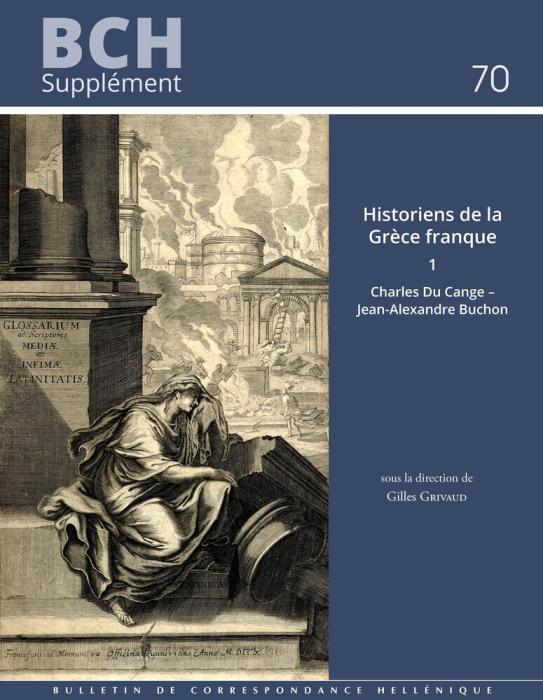
À 150 ans d’écart, Charles Du Cange (1610-1688) et Jean-Alexandre Buchon (1791-1846) dessinent les contours épistémologiques du domaine d’études que représente l’expansion franque et latine en Grèce médiévale. À leurs yeux, la période mérite d’être détachée des évolutions propres à l’Orient latin en observant la dynamique des rapports de force dans les Balkans et en Adriatique. Ils construisent un récit fondé sur une histoire politique et militaire, centrée sur une conception aristocratique de l’histoire, qui justifie d’amples enquêtes généalogiques. Évoluant en des contextes intellectuels distincts, ils jettent les bases des futures recherches sur le domaine : si Du Cange fonde son érudition sur l’examen des sources manuscrites disponibles en France, Buchon élargit les investigations aux dépôts d’archives italiens. Pour apprécier leurs apports respectifs, ce volume rassemble dix-neuf études issues des colloques organisés à l’Université de Rouen-Normandie, le 28 octobre 2022, et à l’École française d’Athènes, les 26-27 octobre 2023.
Gilles Grivaud, professeur émérite d’histoire médiévale à l’Université de Rouen-Normandie, travaille sur Chypre à l’époque latine, ainsi que sur l’historiographie de la Grèce médiévale et moderne. Auteur de Venice and the Defence of the Regno di Cipro: Giulio Savorgnan’s Unpublished Cyprus Correspondence, 1557–1570 (Bank of Cyprus Cultural Foundation, 2016) et de Famagusta: Volume 2. History and Society (Brepols, 2020), en collaboration avec Angel Nicolaou-Konnari et Chris Schabel, Gilles Grivaud dirige le programme Écrire l’histoire de la Grèce franque (EFA, GRHis), projet à l’origine du portail Φραγκικά–Frankika (frankika.efa.gr).
150 years apart, Charles Du Cange (1610–1688) and Jean-Alexandre Buchon (1791–1846) outlined the epistemological contours of the field of study defined by Frankish and Latin expansion in medieval Greece. In their view, the period deserved to be detached from developments specific to the Latin East by observing the dynamics of power relations in the Balkans and the Adriatic. They constructed a narrative based on political and military history, centred on an aristocratic conception of history, which justified extensive genealogical investigations. Operating in different intellectual environments, they laid the foundations for future research in the field: while Du Cange rounded his erudition on the examination of manuscript sources available in France, Buchon extended his inquiries to Italian archives. To highlight their respective contributions, this volume brings together nineteen studies from symposia held at the University of Rouen-Normandie on 28 October 2022 and at the École française d’Athènes on 26–27 October 2023.
Gilles Grivaud, Emeritus Professor of Medieval History at the University of Rouen-Normandy, focuses on Cyprus during the Latin period, as well as on the historiography of medieval and modern Greece. He is the author of Venice and the Defence of the Regno di Cipro: Giulio Savorgnan’s Unpublished Cyprus Correspondence, 1557–1570 (Bank of Cyprus Cultural Foundation, 2016) and Famagusta: Volume 2. History and Society (Brepols, 2020), co-authored with Angel Nicolaou-Konnari and Chris Schabel. Gilles Grivaud directs the research programme Écrire l’histoire de la Grèce franque (EFA, GRHis), the project behind the portal Φραγκικά–Frankika (frankika.efa.gr).
Collection et numéro : BCH Suppl. 70
Date de parution : 15 décembre 2025
ISBN : 978-2-86958-686-4